202511:27Luxury real estate market trends in Morocco (and Marrakech) April 2025
- By Barnes Marrakech
- 19 Décembre 2025
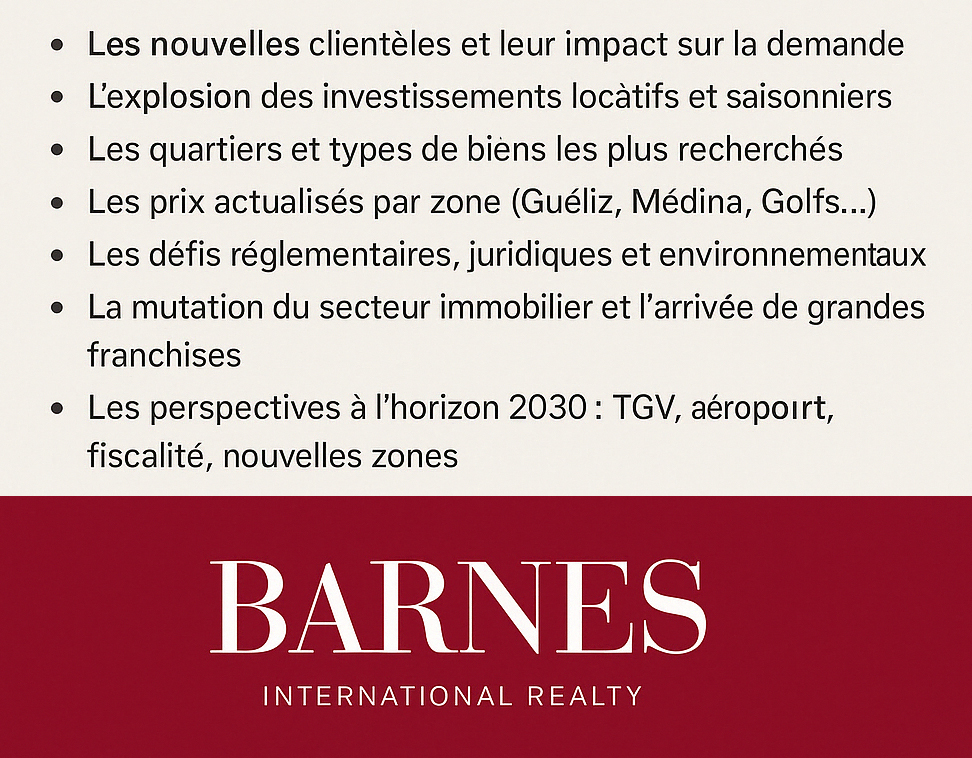
1.1. Strong demand growth since Covid
a) Return of the diaspora and international clientele Among the drivers of this enthusiasm, there is strong demand from international clientele, mainly French-speaking, and especially the massive return of the Moroccan diaspora, particularly from France, Belgium, Spain, and Italy. Many children of immigrants are now choosing to invest in Morocco, and Marrakech concentrates a large part of this dynamic. This movement reflects a genuine return to roots, combined with a desire to secure assets, enjoy an attractive lifestyle, and participate in the Kingdom's economic growth. It is also accompanied by very good rental returns, as well as interesting opportunities in property development or property trading activities.
b) Strengthened interest from major international fortunes In the latest 2025 edition of the BARNES Global Property Handbook, Marrakech is highlighted as an emerging destination for wealthy investors. This annual guide, which analyzes luxury real estate market trends on a global scale, emphasizes the growing interest of Ultra High-Net-Worth Individuals (UHNWI) in cities offering exceptional quality of life, economic stability, and attractive investment opportunities. This recognition strengthens Marrakech's image as a strategic luxury real estate hub.
c) Strong recovery in transactions Since the end of the pandemic, Morocco — and particularly Marrakech — has experienced an explosion in demand for luxury real estate, driven by international and diaspora clientele. Prestige property transactions in Marrakech have surged by more than 25% compared to 2019. Among the most active nationalities: French, Swiss, Belgians, Italians, but also a rise in buyers from the Gulf.
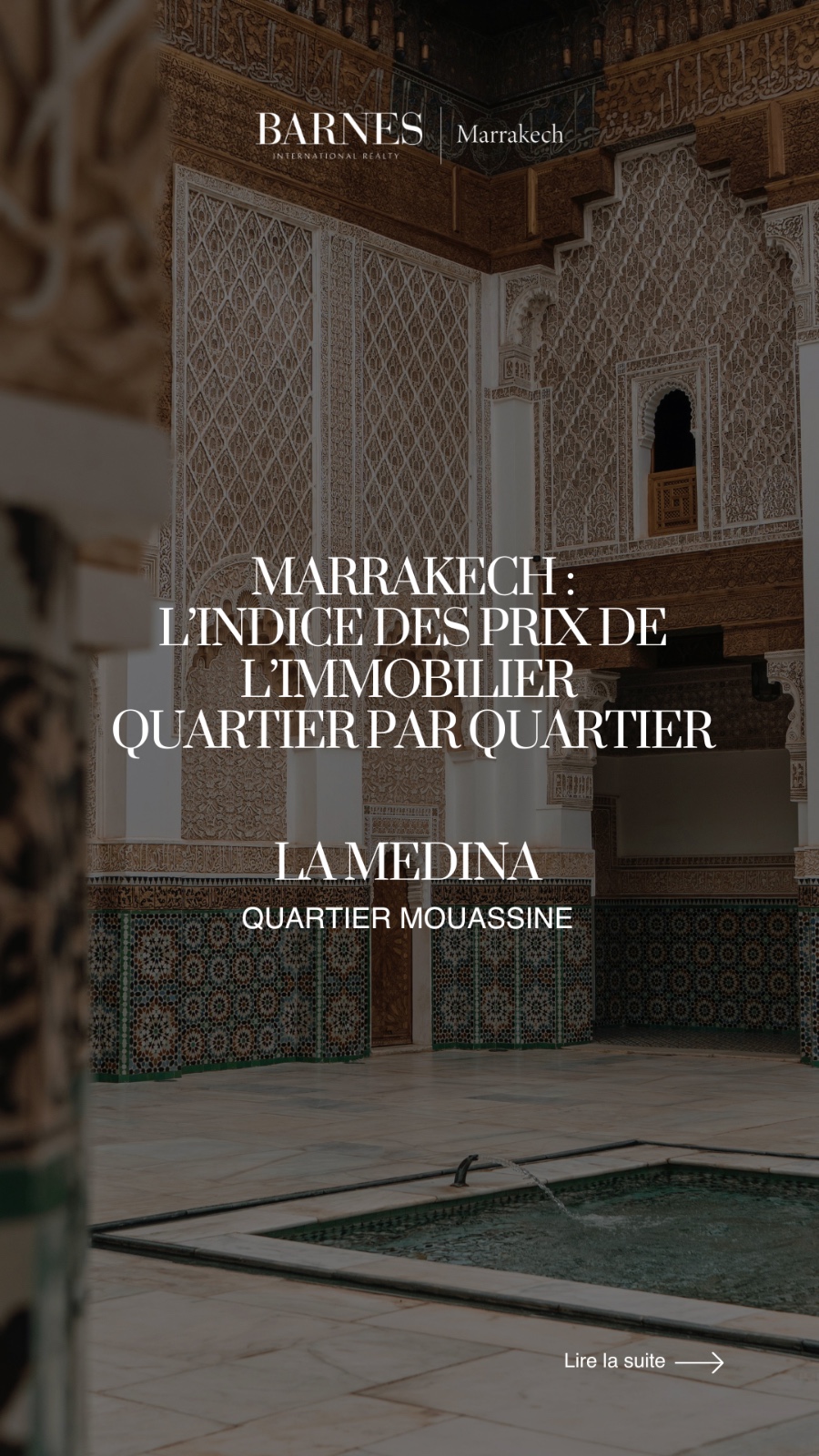
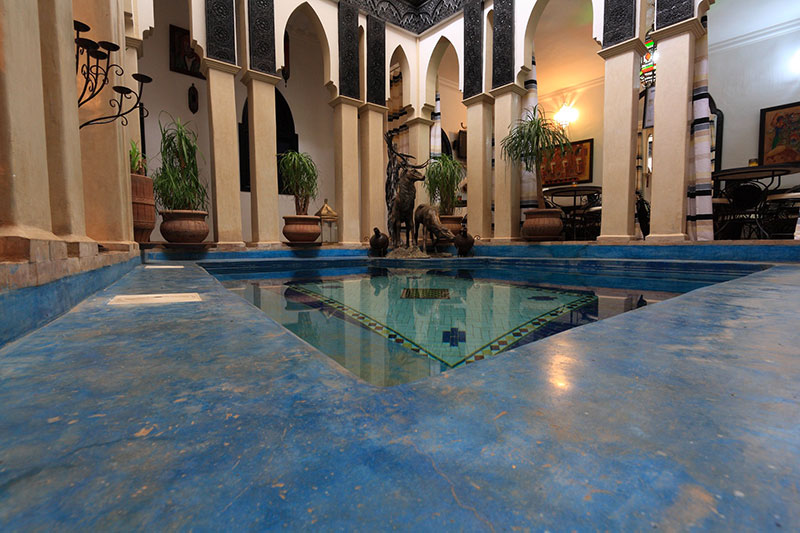
d) Renaissance of the medina and quality urbanism Marrakech is currently experiencing the country's strongest enthusiasm, as well as the sharpest price increase in luxury real estate. This dynamic is reinforced by the profound urban transformation the medina has undergone in recent years: renovation of iconic neighborhoods such as Dar Bacha, Mouassine, or Riad Zitoun, qualitative standardization of shops and boutiques... The medina, more beautiful than ever, now attracts large numbers of tourists. You can find everything there: refined stores, boutique hotels, panoramic rooftops, trendy restaurants, modern concept stores... This excitement reinforces the residential and rental attractiveness of the city's historic center.
e) Seasonal rentals and rental yields attract many investors Since 2023, the growth of seasonal rental investment (Airbnb, Booking, etc.), with returns that can exceed 8 to 10% per year, attracts many investors, but also causes increasing pressure on the annual rental market, which has become less accessible for locals and residents.
f) Upscaling of hotel and gastronomic offerings At the same time, Marrakech is experiencing notable upscaling, driven by an exceptional offering of very high-end luxury hotels, charming riads, and upscale restaurants, whether international or local. This vitality significantly strengthens Marrakech's tourist and residential attractiveness, which now stands as a destination favored by the international jet set, on par with New York, Miami, London, or Paris.
g) Almost non-existent seasonality Unlike other destinations, Marrakech now experiences virtually no low season.
h) Tax changes in Europe: an opportunity for Morocco Portugal ended the NHR (Non-Habitual Resident) tax regime on January 1, 2024, for new applications. This regime, which allowed reduced or even zero taxation, had attracted many wealthy individuals. Since its abolition, Morocco has emerged as a refuge destination, combining an attractive tax framework, a high-end lifestyle, and a real estate market still undervalued on an international scale.
⸻
1.2. Types of properties sought
a) Riads, apartments, and studios with high rental yields In addition to villas, land, and riads, small apartments such as studios or one-bedroom units are also highly sought after, particularly for seasonal rental investment on platforms like Airbnb. Their rental yield is often excellent and demand remains strong.
b) Land for villa construction Subdivided land intended for villa construction sells very well, particularly in sought-after neighborhoods, areas near golf courses, and newly urbanized zones on the outskirts of Marrakech. 30 to 50% price increase over three years.
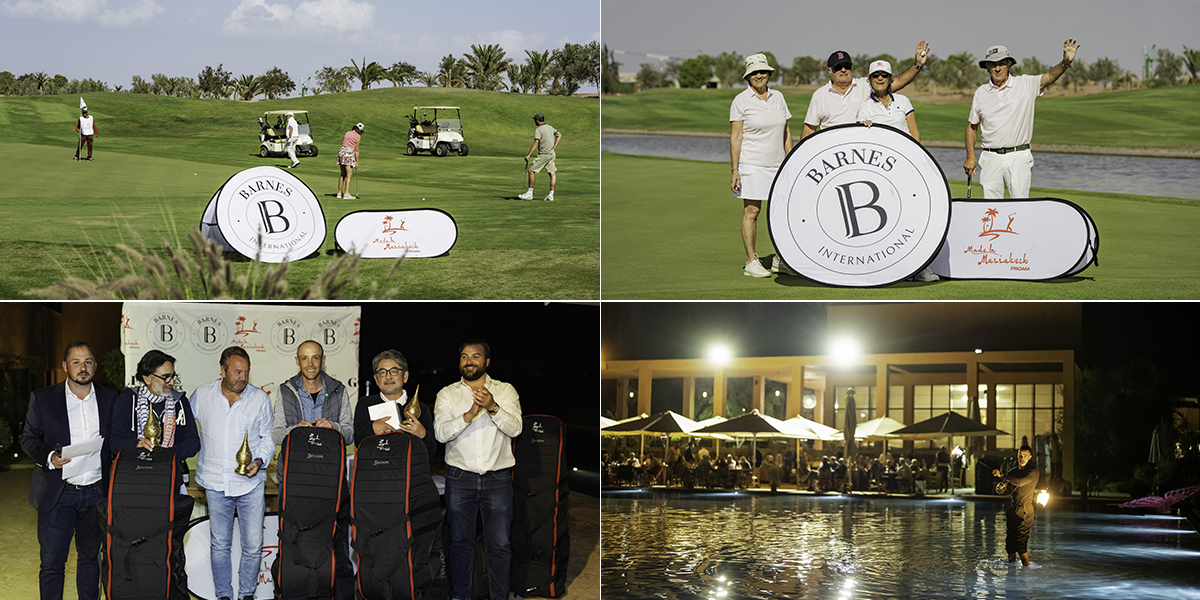
c) Strategic attractiveness of golf courses Golf courses represent a true strategic asset: the city has about a dozen international-level courses. Their worldwide reputation attracts wealthy clientele, both for acquiring and renting villas with views of the greens.
d) Typology of most sought-after properties Buyers are mainly looking for:
- High-end apartments and studios with pools for furnished rentals with yields, or as second homes;
- Contemporary villas with gardens, pools, and views of the Atlas or greens;
- Renovated riads in the medina for personal use or rental investment;
- Guesthouses with 5 or more bedrooms in the medina and outside Marrakech.
e) New medium-density urbanizable zones The opening of new medium-density urbanizable zones (10 to 20 villas per hectare) generates keen interest from developers. Many come from the diaspora, but also from Marrakech or Casablanca and other regions of the Kingdom, attracted by the potential of these areas — notably Tahenaout, the Ourika road, or the Amizmiz road.
f) La Palmeraie: the ultra-luxury sector par excellence La Palmeraie remains the ultra-luxurious neighborhood for master villas (1,000 to 2,000 m² of living space on parks of 1 to several hectares). Next come front-line golf villas.
⸻
1.3. Prices
a) Rental of prestige villas A prestige villa rents for between 5,000 and 30,000 dirhams per night in high season, depending on location, quality of services, and capacity. Annually, 30,000 dh for 500m² of land up to 150,000 dh per month and more.
b) Apartment prices in the city center Apartments in the Guéliz neighborhood sell for between 20,000 and 25,000 dirhams per m². In Hivernage, prices reach 30,000 to 40,000 dirhams per m².
c) Value of high-end villas High-end villas range from 6,000,000 to several million dirhams.
d) Riad prices in the medina Riads located in sought-after neighborhoods such as Dar Bacha, Mouassine, or Riad Zitoun are negotiated between 30,000 and 50,000 dirhams per m². In less prestigious neighborhoods: between 20,000 and 30,000 dirhams per m².
e) Rental profitability These price levels justify significant profitability for properties intended for rental.
⸻
Axis 2: Challenges of luxury real estate
⸻
2.1. Administrative and legal challenges
a) Constraints related to AVNA One of the main obstacles remains the regulation related to AVNA (Non-Agricultural Use Authorization). Even if certain lands, although outside the urban zone, are open to urbanization, a foreign investor can acquire a villa or individual lot there, but cannot develop a large-scale real estate project (subdivision or villa complex). This restriction hinders many operations, despite strong demand from international developers.
b) Complexity of procedures for foreigners Furthermore, real estate acquisition in Morocco sometimes remains complex for foreigners: obtaining land titles, notarial procedures, registration delays... However, with the progressive digitalization of administrative procedures (building permits, occupancy permits), the situation is evolving positively.
c) Need for transparency in the secondary market Better transparency in the secondary market is expected. It would be relevant for the Land Registry, like in other countries, to regularly publish data on completed transactions (number, prices, evolution), thus allowing a more readable structuring of the market. The use of "under-the-table" payments is also gradually declining.
⸻
2.2. Lack of sector professionalization and proliferation of small intermediaries
a) Still insufficient regulation The real estate agent profession remains poorly regulated legally, while the luxury segment requires precise technical skills: reliable valuation, taxation, wealth structuring, rental valuation, legal knowledge, and mastery of international real estate marketing.
b) Arrival of international franchises However, in recent years, several international franchises specializing in luxury real estate have established themselves in Marrakech. They have brought high standards of professionalism and more rigorous structuring of the profession. This evolution contributes to raising the overall level of service and strengthening investor confidence, whether local or foreign.
c) BARNES's structuring role A pioneer in this segment, BARNES has been present in the Marrakech market for over 8 years, and for 20 years before becoming a franchise. Thanks to an experienced team, a qualified legal department, and tailored support, the brand has largely contributed to structuring the sector locally.
⸻
2.3. Urban planning, protected zones, and heritage preservation
a) Context of urban and land pressure In Marrakech, urban and land growth must deal with several major constraints: preservation of the UNESCO-listed medina heritage, respect for agricultural zones, and safeguarding of 20th-century Art Deco and modernist villas in Guéliz and Hivernage against developer pressure.
b) Preservation of the UNESCO-listed medina heritage The strong pressure on riads and commercial spaces, often transformed into concept stores or design galleries, poses a real risk of denaturing the medina. It could gradually lose its soul and become an exclusively tourist showcase. Yet it is essential to preserve genuine diversity, maintaining authentic local life with its residents, neighborhood shops, artisans, and traditional markets. The challenge is to find a subtle balance between modernity and heritage: making contemporary boutiques, charming riads, elegant rooftops, and vibrant social fabric coexist, so that the medina remains a living place, anchored in its cultural identity.
c) Safeguarding Art Deco and modernist villas Some iconic Art Deco and modernist villas from the 20th century in Guéliz and Hivernage have been destroyed in recent years in favor of residential buildings. In response, a local association has compiled an inventory of villas to protect from demolition. This initiative marks progress toward more responsible urban planning that respects Marrakech's architectural identity.
⸻
2.4. Water management: a resource under pressure
a) Restricted water access in peripheral zones Access to well water is becoming a crucial issue for real estate development in Marrakech. In areas outside the urban perimeter, drilling is now heavily regulated or even prohibited. Yet water is essential for maintaining gardens, pools, and green spaces, which fully contribute to Marrakech's attractiveness as a "garden city."
b) Need to adapt projects This scarcity requires developers to design their projects differently, integrating sustainable solutions: gray water recycling, drip irrigation, planting low-water-consuming species, etc. Efficient water management will be one of the major determinants of luxury real estate in Marrakech.
⸻
2.5. Sustainable development and new requirements
a) Growing buyer sensitivity High-end buyers are increasingly sensitive to energy efficiency, the use of local and natural materials, and landscape integration.
b) New practices in landscape design Creating eco-responsible dry gardens is now an integral part of the planning process. The alliance between luxury and ecology is becoming a central issue for architects and developers.
⸻
2.6. Studio regulation and supervision of seasonal rentals
a) Capping the number of studios per building Faced with rapid growth in short-term rentals in Marrakech, Moroccan authorities are progressively strengthening sector regulation. The number of studios in a residential building will now be capped at a certain percentage of total units, according to new building permits. The objective is to preserve a balance between tourist accommodation and primary housing, and to prevent too many buildings from being exclusively dedicated to Airbnb or Booking, to the detriment of local families.
b) New obligations for owners At the same time, draft decree no. 2.23.441, supplementing law 80.14, introduces new obligations for owners offering their properties for seasonal rental: mandatory declaration, registration, compliance with safety standards, and reinforcement of tax obligations. These measures aim to clean up the market, protect permanent residents from nuisances, and promote harmonious and inclusive real estate development.
⸻
Axis 3: What future for luxury real estate in Morocco?
⸻
3.1. An increasingly attractive country
a) Enhanced accessibility thanks to low-cost airlines Another strategic growth lever is the liberalization of Moroccan airspace. Marrakech now benefits from the massive arrival of low-cost airlines, notably Ryanair, which serves numerous European destinations with direct flights. This development constitutes a major asset, both for tourists wishing to avoid stopovers and for second home owners, who can reach Marrakech in less than three hours at very competitive prices.
b) Strengthened profile through major sporting events Co-hosting the 2030 World Cup with Spain and Portugal constitutes a powerful lever for the Kingdom's image and investments.
c) Diversification of international clientele Marrakech now attracts increasingly diverse international clientele: Canadians, Scandinavians, South Africans, Asians...
⸻
3.2. Major infrastructure projects
a) New Marrakech airport Morocco is investing massively in its infrastructure. A new airport in Marrakech, with a target of 12 million passengers, is planned.
b) Marrakech–Casablanca high-speed rail line A Marrakech–Casablanca high-speed rail line is planned by 2030.
c) General improvement of connections These investments are accompanied by improved connectivity, road network, and development of high-end concierge services.
d) New international connections with high potential The opening of new air routes to the United States also opens major prospects, attracting very high-income clientele.
⸻
3.3. Marrakech, a strategic city
a) International air accessibility Today, Marrakech is served by more than 30 international airlines, with direct flights from Paris, London, Milan, Dubai, Doha, etc.
b) Multifunctional attractiveness It stands as an ideal destination for weekends, second homes, and rental investments.
⸻
3.4. Projections
a) Market doubling by 2030 By 2030, Morocco's luxury real estate market could double in value, provided appropriate support (regulation, taxation, professional training).
b) Central role of Marrakech and emergence of other cities Marrakech will remain at the heart of this expansion, but cities like Essaouira, Fes, and Dakhla are also gaining momentum.
⸻
Conclusion
"Morocco, and Marrakech in particular, are on track to become a hub of Mediterranean luxury: sunny, accessible, culturally rich, and strategically positioned between Europe, Africa, and the Gulf.